Process mapping
Living BPMN maps: the model is the truth, the PDF and the XML are only renderings.
A process map gets delivered as a PDF, filed in a shared folder, and stops being true at the first change. Six months later, it gets redone.
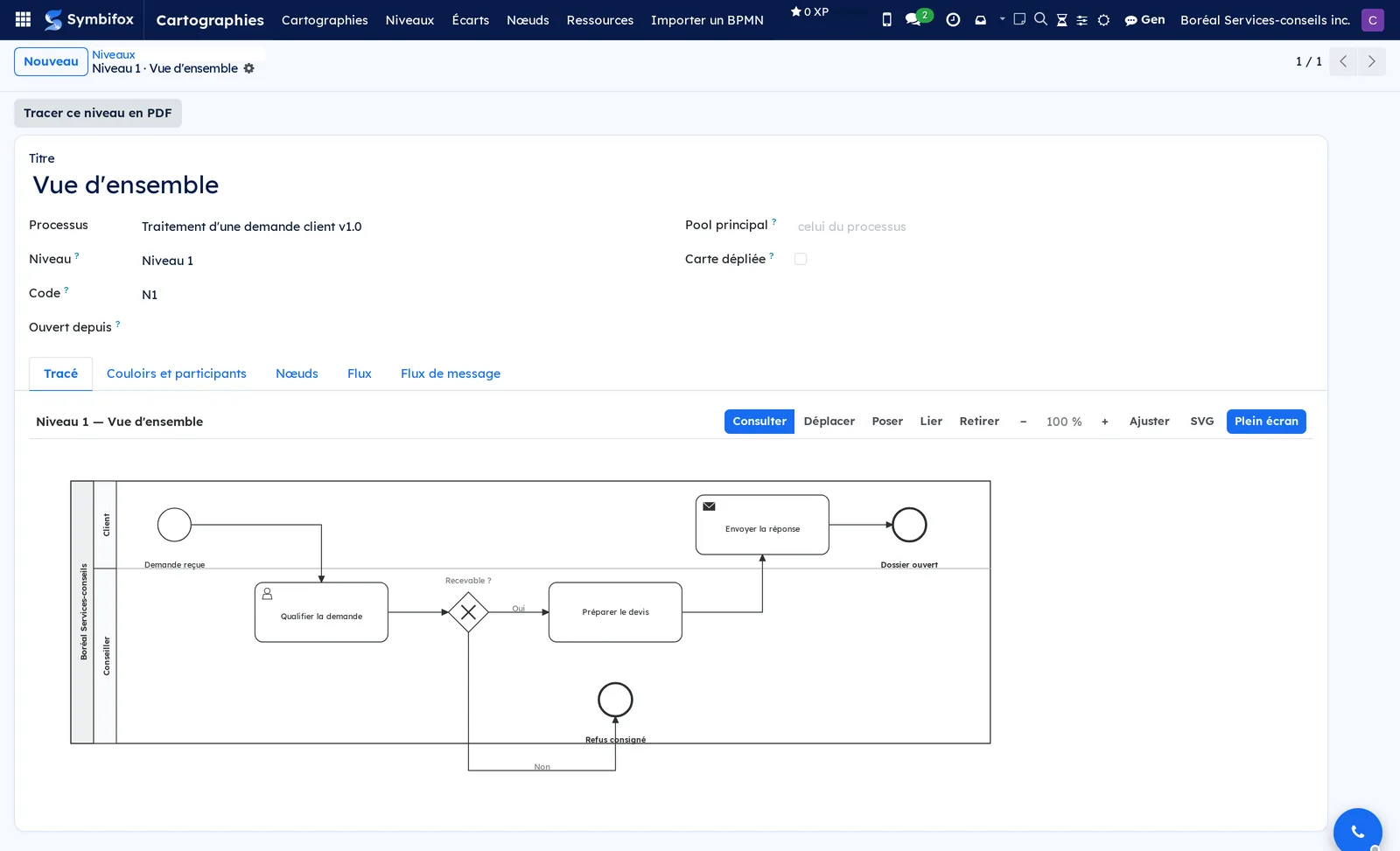
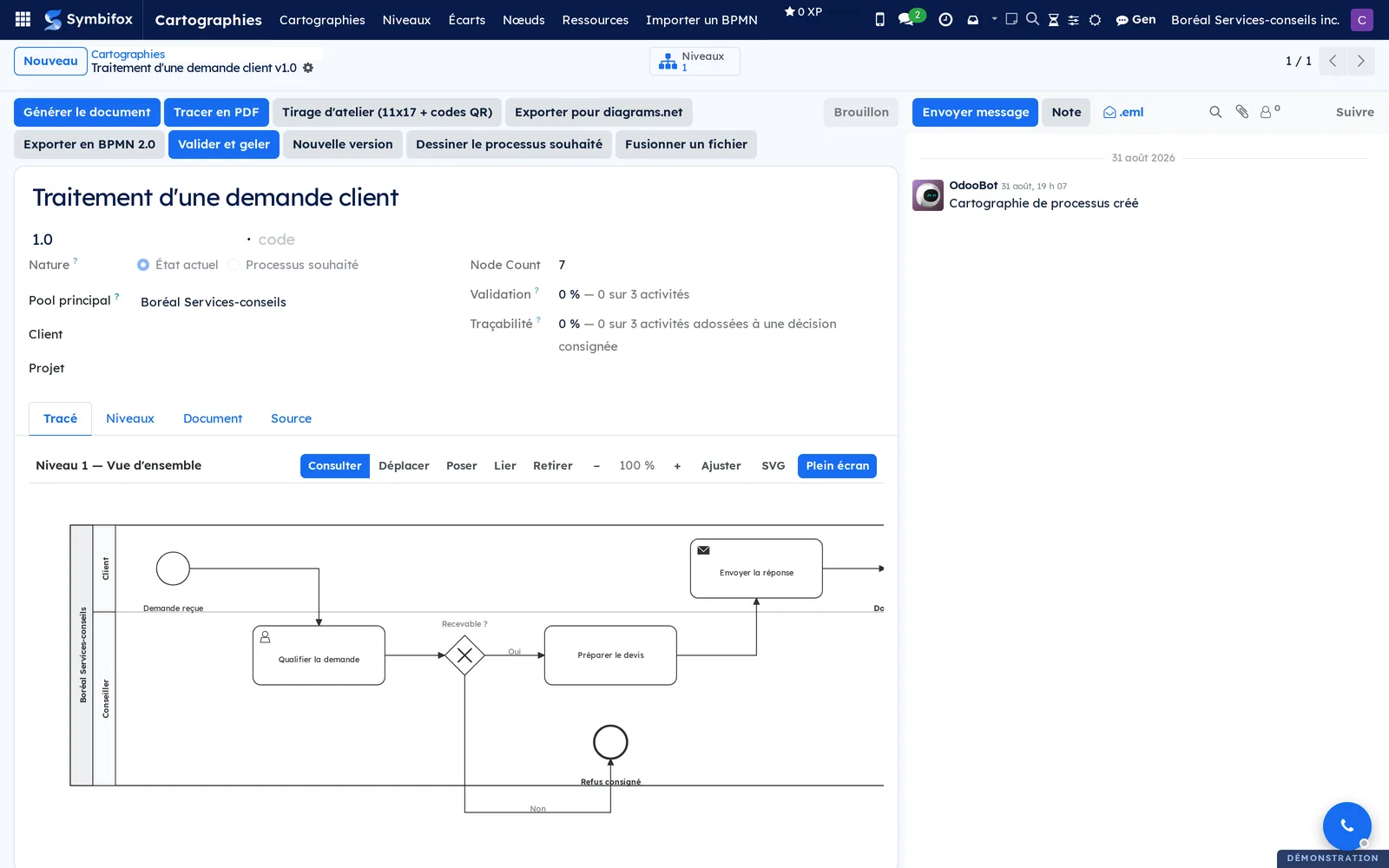
Here the pools, lanes, nodes and flows live as records, attached to a client and a project, versioned. The model governs: the PDF, the .bpmn and the .drawio are only renderings of it, and a fresh one can always be produced.
A map is cut into levels: the overview at level 1, collapsed sub-processes at 2 and 3, each its own page. That is what lets you show the whole to a management team and the detail to the crew without keeping two documents.
Every step carries its own message thread, its workshop photos and its documents. That is where the question that kills process maps gets settled: where did so-and-so's remark about step 7 go.
An as-is map stops being a one-off deliverable and becomes a reference worked on continuously. Export to .bpmn and .drawio to carry on in a third-party editor.
Comparable to Lucidchart or Visio, wired to your records
Shall we look at your case together?
Tell us what you run today. We will tell you honestly whether Symbifox helps or not.
The catalog grows almost every month.
What gets added, what we learn deploying it, and nothing else. You leave whenever you want.
One confirmation email, and nothing before you follow its link. Then 10 welcome emails, one a week, then the updates. No tracker, no resale.