Kitchen
The real cost of every plate, kept current by your vendor bills.
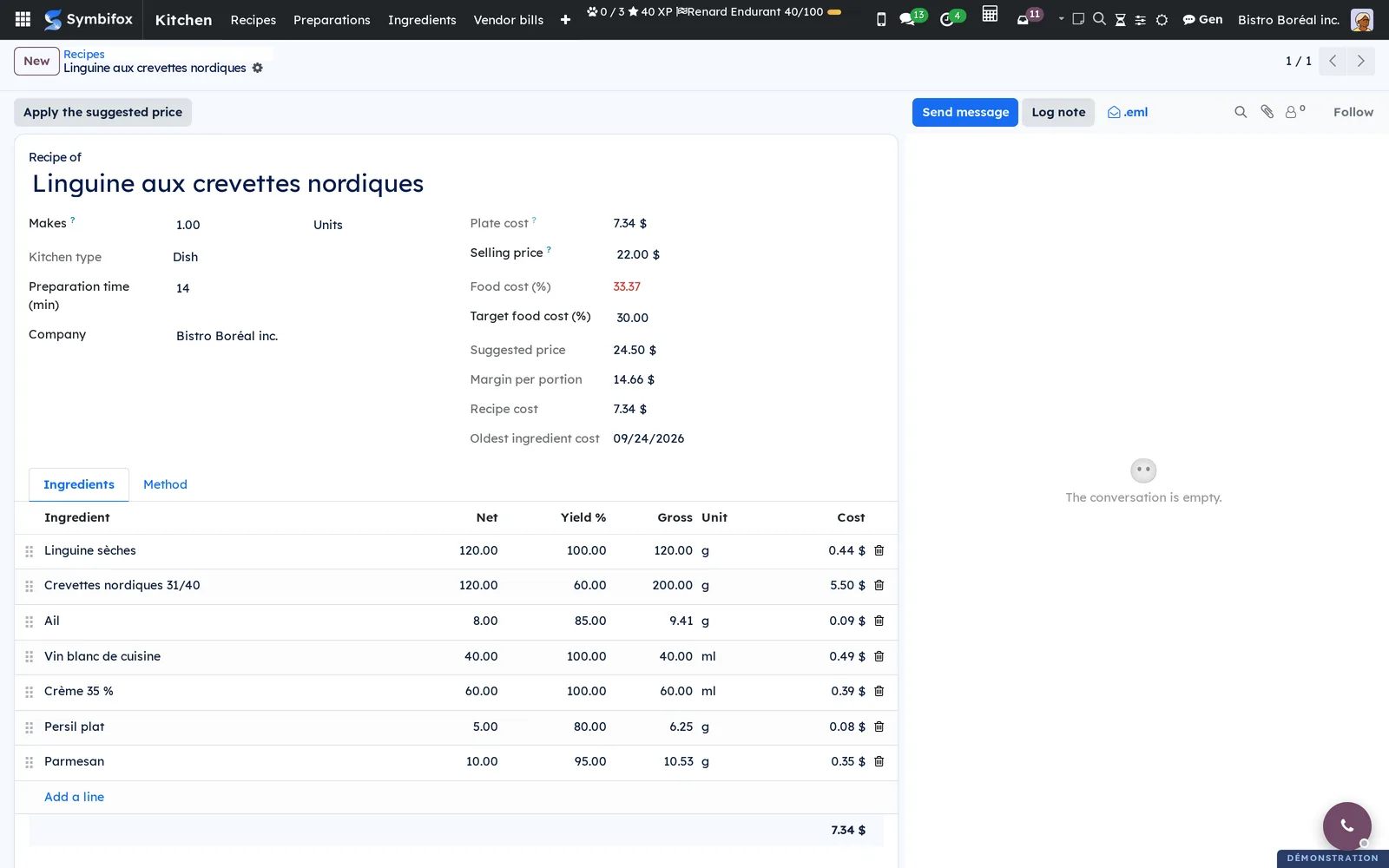
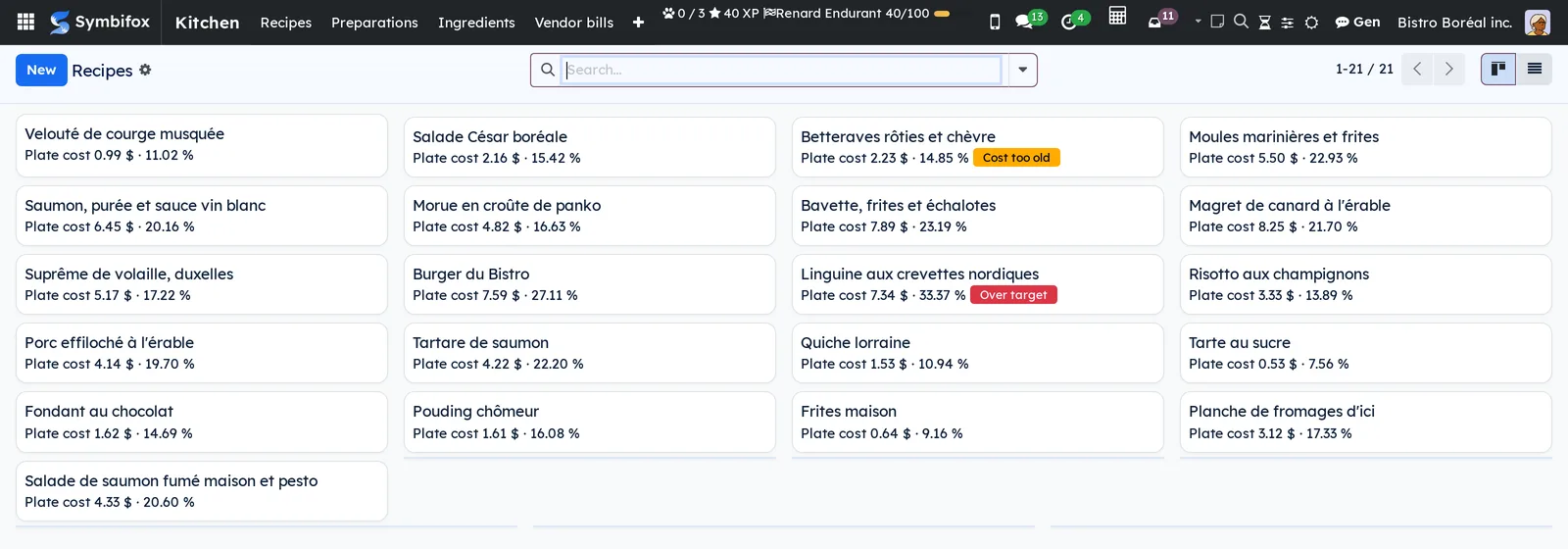
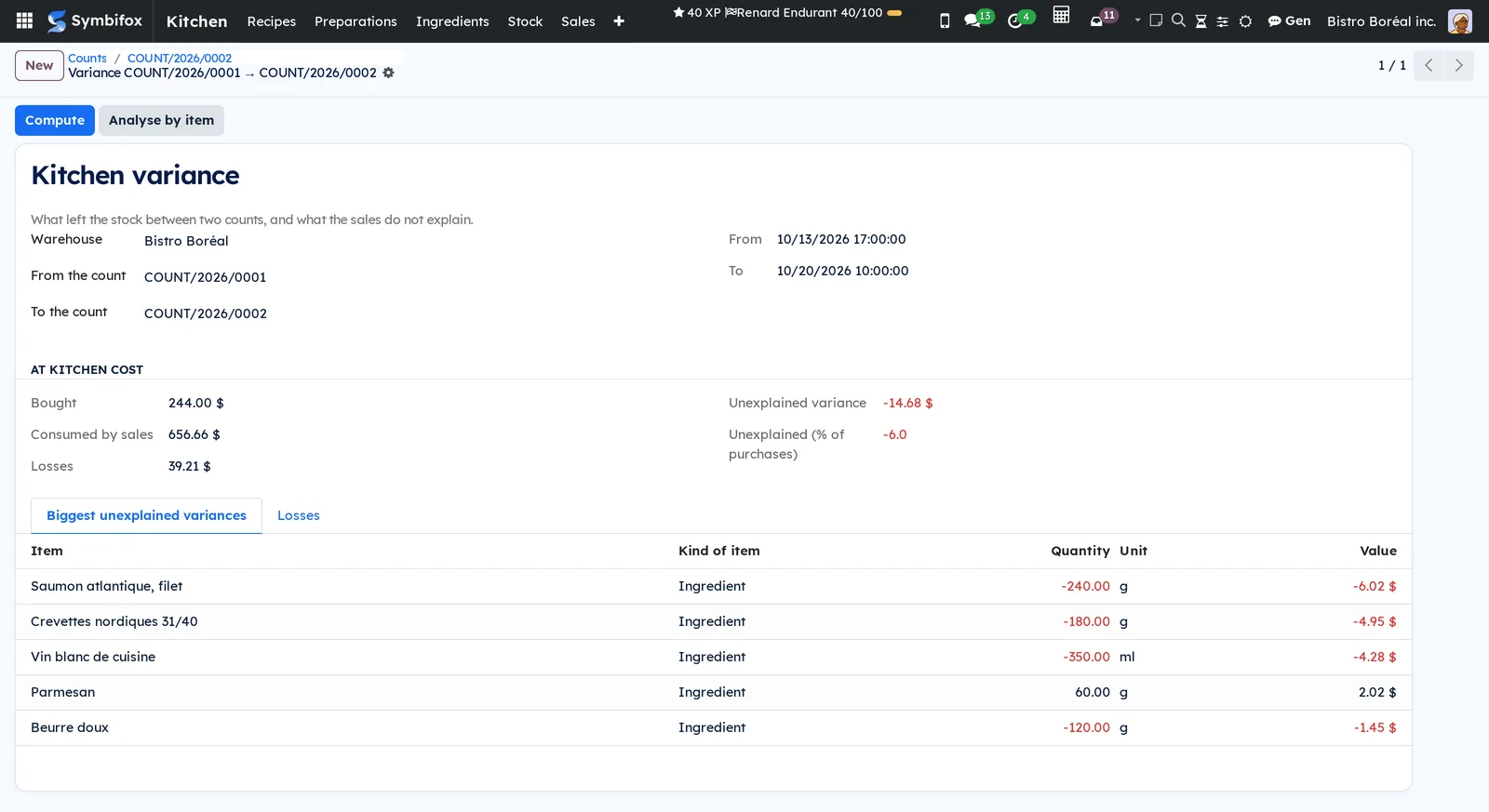
Every dish is a recipe: net quantity, yield and gross quantity per ingredient, sub-recipes included (stock, sauce, dough). An ingredient's cost comes from the latest validated vendor bill, brought back to the stock unit. Each recipe gives its plate cost, food cost ratio and a suggested price from your target and your rounding, and the kitchen manager gets an activity when a bill pushes a dish over its target. Bill lines without a product are matched once to an ingredient, with their pack size. Stock is counted location by location on a phone, each location applied as soon as it is entered, and a loss is declared in a few taps, valued at kitchen cost. Every sale takes its ingredients out of the stock, whether it comes from the register, a sales order, an invoiced banquet, another register or school meals, and the variance report shows, between two counts, what the sales do not explain. In the dining room, the host seats the guests section by section in turn, keeps the waiting list and watches the kitchen's pace; the waiter orders at the table and the dishes reach the kitchen screen, station by station. An order guide per supplier suggests what to order for its next delivery, until the delivery after, between each ingredient's min and max, and prepares the request for quotation. Menu engineering places each dish of its section by popularity and margin (star, plowhorse, puzzle, dog), and shows ahead which dishes an ingredient increase would push over their target. Allergens follow the ingredients up to the dishes, the technical sheet and the allergen sheet print, and cooks read recipes without the costs.
Comparable to A recipe-costing spreadsheet, or a separate kitchen management app
7 add-on modules
Food allergensOne shared list of Health Canada's priority food allergens for the food modules.
The eleven priority allergens, shared by the kitchen and the school meals: an ingredient declares them, every dish that uses it carries them.
Kitchen and registerDishes sold at Odoo's register take their ingredients out of the stock.
A recipe is put on sale at the register from its form, and the register shows its allergens. A refunded dish comes back to the kitchen on the plate: its ingredients leave again as a loss, reason Customer return, once the return is done.
Kitchen displayDishes sent from the register reach the kitchen screen, station by station.
The waiter orders at the table; each station sees its dishes, their notes and allergens, and moves them from to do to served. A dish cancelled after it was sent is decided: a loss, or not started.
Host standThe host seats the guests on the register's floor plan, section by section in turn.
Each table shows where it is, the next section is proposed from its server's covers, and the waiting list quotes a wait from the real length of meals. A gauge keeps the kitchen's pace. The allergy noted at the door follows to the kitchen, then is erased after the service.
Kitchen and salesDishes on sales orders and invoiced banquets leave the stock, once.
A sales order takes its dishes out with its delivery; an invoice with no sales order, when it is posted. Reset to draft, cancelled or corrected by credit note, it puts the food back.
Sales from another registerThe sales export of Square, Lightspeed, Toast or Clover takes the dishes out of the stock.
A CSV or Excel file, each item matched once to its dish, one consumption per day; a file or a day already imported is refused.
Kitchen and school mealsA meal of the school menu is a kitchen dish: its cost, its allergens, its exit from the stock.
The dish's allergens count at the order, and the meals served leave the stock at the school's cancellation cut-off.
Shall we look at your case together?
Tell us what you run today. We will tell you honestly whether Symbifox helps or not.
The catalog grows almost every month.
What gets added, what we learn deploying it, and nothing else. You leave whenever you want.
One confirmation email, and nothing before you follow its link. Then 10 welcome emails, one a week, then the updates. No tracker, no resale.