Working Time
The hours actually worked, rebuilt from the traces of the day, seen first by the person and off until they switch it on.
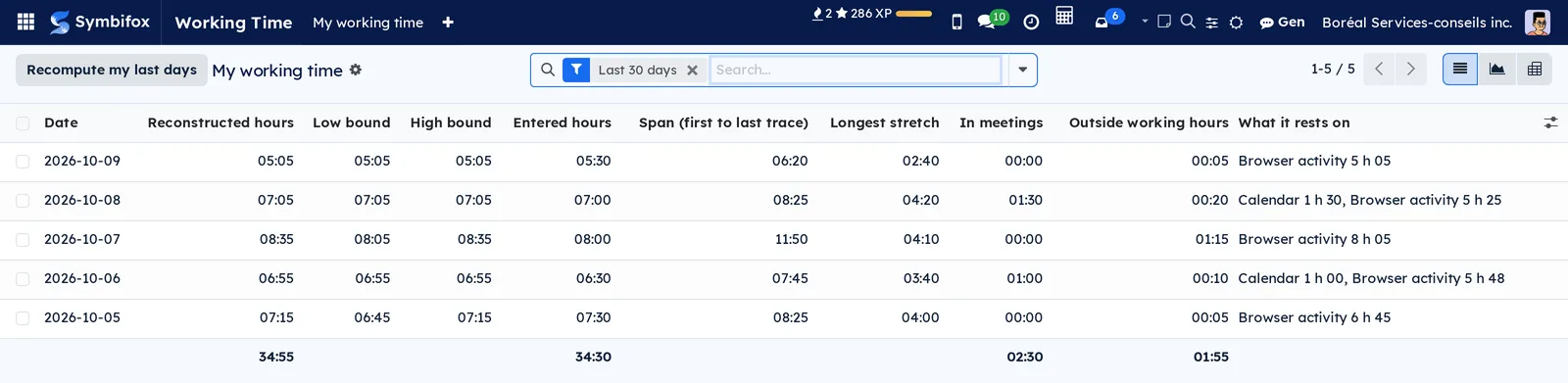
A timesheet filled in after the fact is a guess, and work done with several assistants running in parallel gets entered end to end.
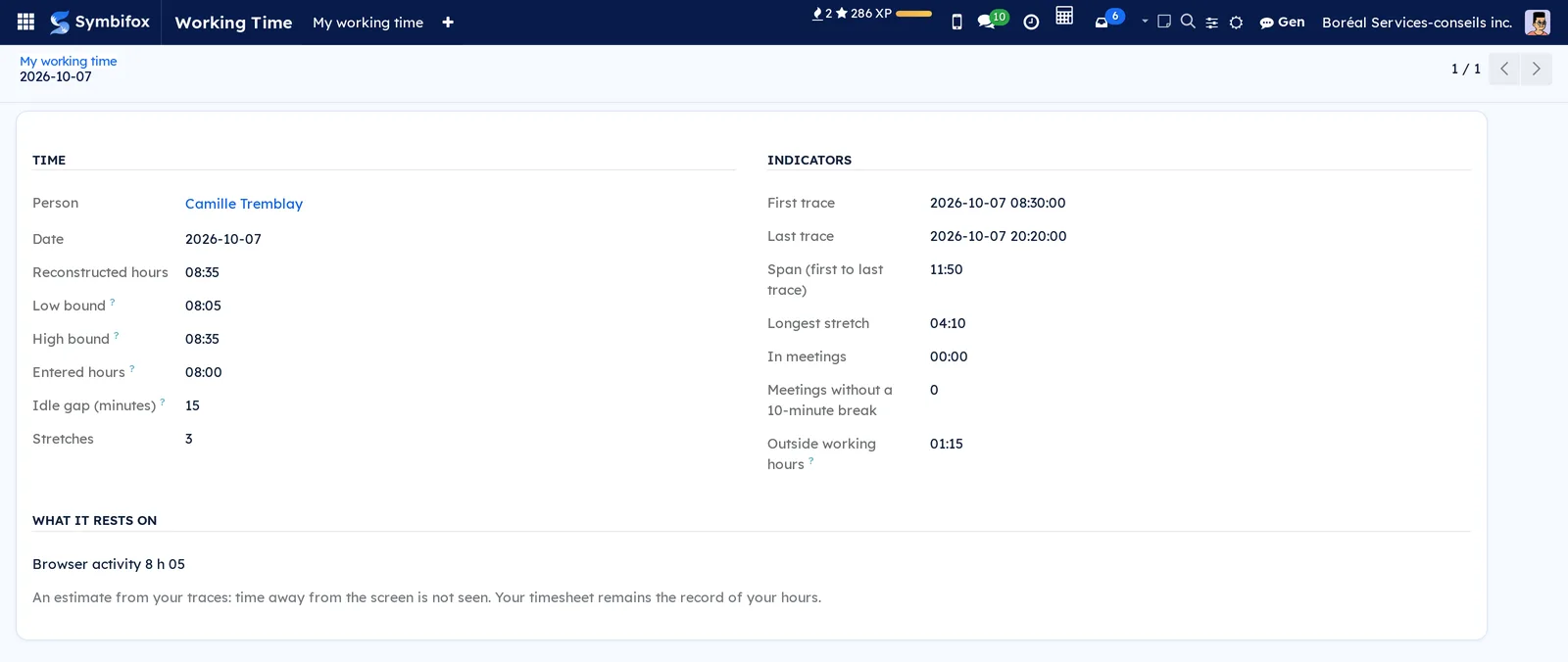
Whoever switches it on themselves, after reading a notice (Quebec's Law 25, s. 8.1), sees their rebuilt hours day by day, from the only traces that prove a human hand: keyboard or mouse in Odoo, accepted meetings and, with the linked modules, notes, emails sent, prompts to Gen, attendance marked in meetings and timer stretches. Each minute counts once, and every day shows its low and high bound next to the hours entered.
Their indicators (span of the day, longest stretch, meetings, time outside working hours) are switched on separately, and so is taking in their earlier days from before activation: the last 30 days or all the history kept, under a notice of its own.
⚠️ Nobody else sees anything, managers and administrators included, except the colleagues the person names through a share they can revoke. No score, no ranking. Switching off destroys the traces and the days.
Comparable to Activity trackers such as Hubstaff or Time Doctor, which measure the team for the employer: here the measure belongs to the person first, and nothing is seen without them.
Shall we look at your case together?
Tell us what you run today. We will tell you honestly whether Symbifox helps or not.
The catalog grows almost every month.
What gets added, what we learn deploying it, and nothing else. You leave whenever you want.
One confirmation email, and nothing before you follow its link. Then 10 welcome emails, one a week, then the updates. No tracker, no resale.